
 ChatGPT
 Claude
 Perplexity
Moyamoya disease is a progressive narrowing of the internal carotid arteries at the base of the brain. As the major arteries close down, the brain compensates by growing a tangle of small, fragile vessels — collaterals that are too thin to reliably supply blood and too weak to withstand pressure. The result is a condition that can cause both ischemic strokes (from insufficient blood flow) and hemorrhagic strokes (from ruptured collaterals).
The name comes from the Japanese word for "puff of smoke," which describes how this network of tiny vessels appears on a cerebral angiogram. The condition was first described by Takeuchi and Shimizu in 1957, and the characteristic angiographic pattern remains the diagnostic standard.
Who is affected
Moyamoya disease has a bimodal age distribution: it most commonly presents in children between ages five and ten, and in adults between thirty and fifty. It is more prevalent in populations of East Asian descent — particularly Japanese, Korean, and Chinese — though it is diagnosed worldwide. Women are affected roughly twice as often as men.
An important distinction exists between moyamoya disease (idiopathic, often with a genetic component involving the RNF213 gene) and moyamoya syndrome, where the same vascular pattern develops secondary to another condition — including sickle cell disease, Down syndrome, neurofibromatosis type 1, or prior radiation to the head and neck.
Symptoms
The presentation differs between children and adults. In children, the first sign is typically a transient ischemic attack (TIA) or ischemic stroke — weakness on one side of the body, slurred speech, visual disturbance, or seizures. Adults are more likely to present with hemorrhagic stroke from ruptured collateral vessels, though TIAs and ischemic events also occur.
- Transient ischemic attacks — brief episodes of weakness, numbness, or speech difficulty that resolve within minutes to hours
- Ischemic stroke — more prolonged, potentially causing lasting neurological deficits
- Hemorrhagic stroke — bleeding from fragile collateral vessels, more common in adults
- Seizures — particularly in children
- Recurrent headaches — often severe, sometimes triggered by hyperventilation
- Cognitive decline — progressive if untreated, especially in children
Treatment overview
Medications — including aspirin for clot prevention and calcium channel blockers for headache management — can address symptoms but cannot halt the progressive narrowing of the arteries. Surgery is the only treatment that can restore adequate blood flow to the brain and reduce the risk of future strokes.
Two broad categories of surgical revascularization exist. Direct bypass (most commonly the STA-MCA bypass) physically connects a scalp artery to a brain artery, providing immediate blood flow. Indirect techniques (including EDAS and pial synangiosis) place blood-supply-rich tissue against the brain surface and allow new vessels to grow over weeks to months. The choice of technique depends on the patient's age, the severity of the disease, and the surgeon's experience with both approaches.
Without treatment, moyamoya disease tends to worsen over time. With surgical intervention, the risk of subsequent stroke is substantially reduced, and many patients — particularly children — experience significant neurological improvement.
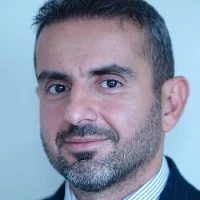
Dr. Kamran Aghayev, MD
Associate Professor of Neurosurgery. Fellowship-trained at the University of South Florida. Over 20 years of operative experience in complex cerebrovascular conditions.